Most Turnaround Problems Start Before Planning Begins
Scope decisions made today determine the workload, risk profile, budget pressure, and execution complexity of the entire event.
The challenge is not identifying work.
The challenge is deciding what belongs, documenting why it belongs, and preserving that decision-making process for the next team.
Voices From The Field
What Event Leaders Tell Us
"The risk score doesn't get lost. The justification doesn't get lost."
— Event Leader
"Your process shouldn't leave when your people do."
— Senior Refinery Executive
The Challenge
Every turnaround starts with more work than can realistically be completed.
Operations wants reliability improvements.
Maintenance wants repairs completed.
Engineering wants upgrades implemented.
Compliance wants requirements addressed.
Leadership wants costs controlled.
Everyone has a valid reason for adding work. Few organizations have a structured process for deciding what should stay, what should wait, and why. Even fewer have a structured process that keeps this information for future reference and auditing.
As scope grows:
Without disciplined governance, the event begins accumulating risk long before the first wrench is turned.
Common Friction Points
Common Friction Points
Scope Justification Disappears
Work gets added but the reasoning behind the decision is rarely preserved.
Previous Lessons Are Forgotten
The same failures return because previous lessons never influence future decisions.
Approval Processes Vary
Different groups evaluate work differently, creating inconsistency and conflict.
Priority Becomes Political
The loudest request often wins instead of the highest-value work.
Knowledge Leaves With People
The logic behind previous decisions leaves with personnel changes, retirements, and role transitions.
Nobody Sees The Full Picture
Risk, cost, scope, readiness, and business priorities are evaluated separately instead of together.
How STOworx Helps
How STOworx Supports Strategic Scope & Governance
Structure The Planning Project Before Planning Begins
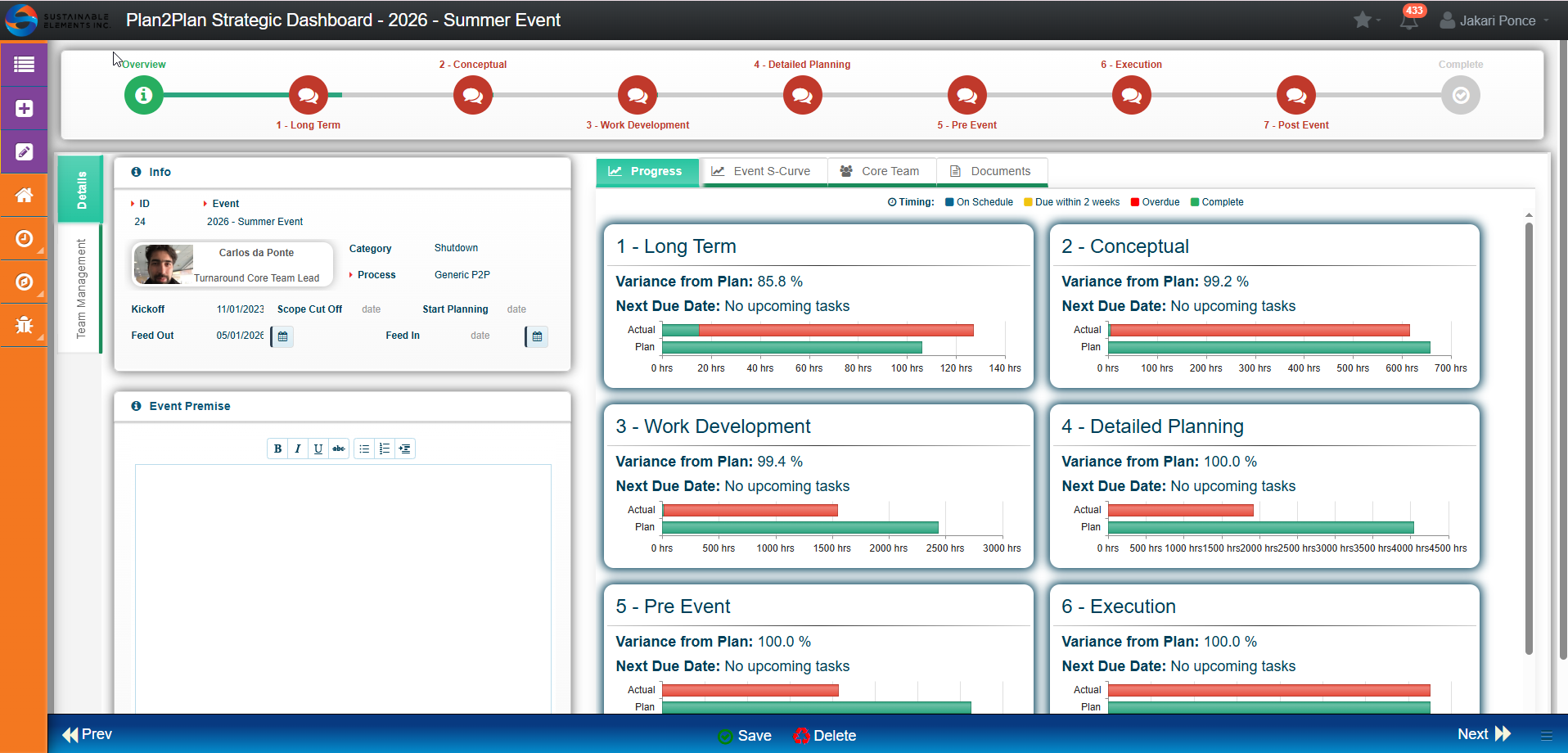
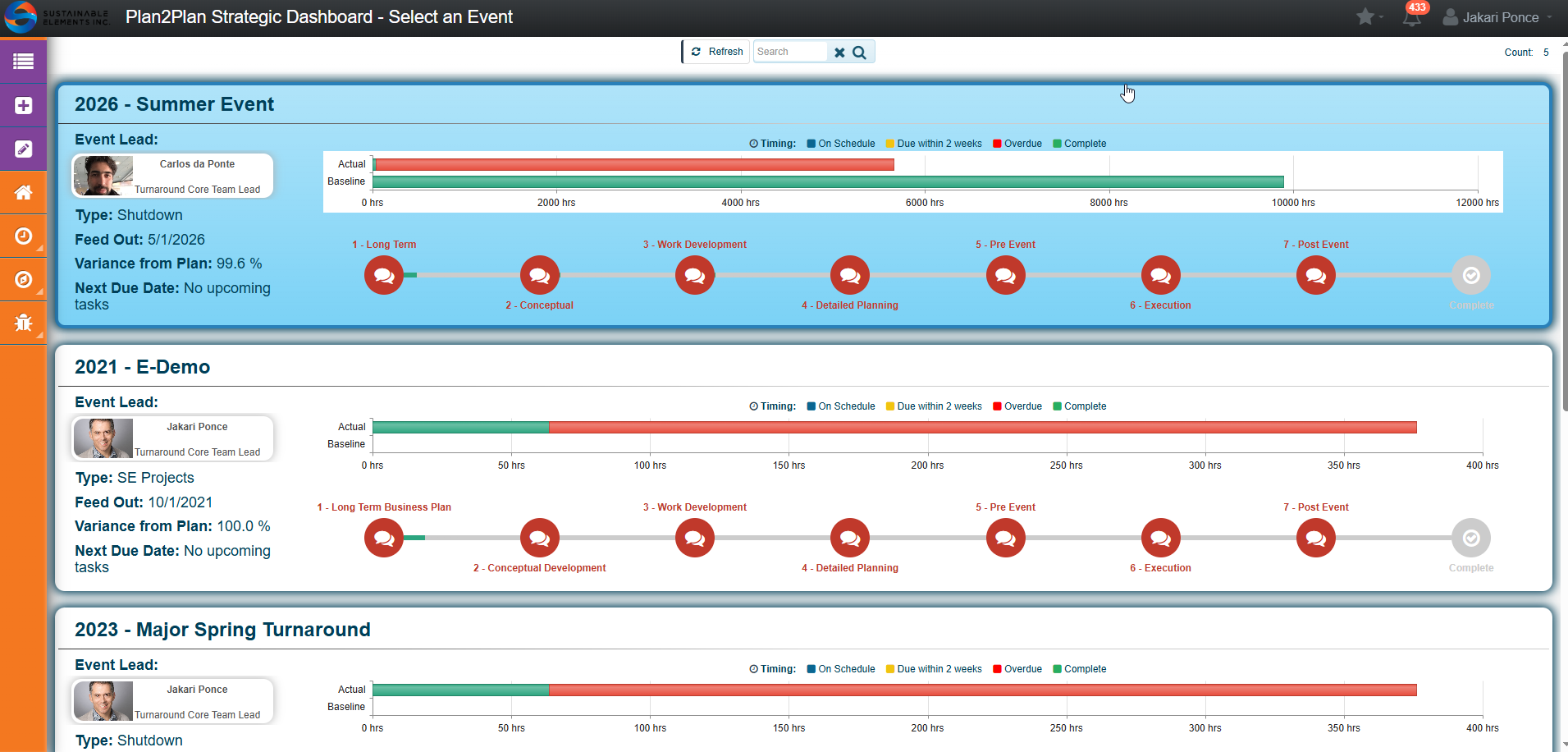
One of the most common mistakes in turnarounds is assuming planning will simply happen once scope is approved. In reality, the planning phase is a major project with its own governance structure, milestones, ownership requirements, deliverables, readiness indicators, and coordination challenges. Plan2Plan provides a structured framework for organizing the planning effort itself.
Make Scope Decisions Defensible
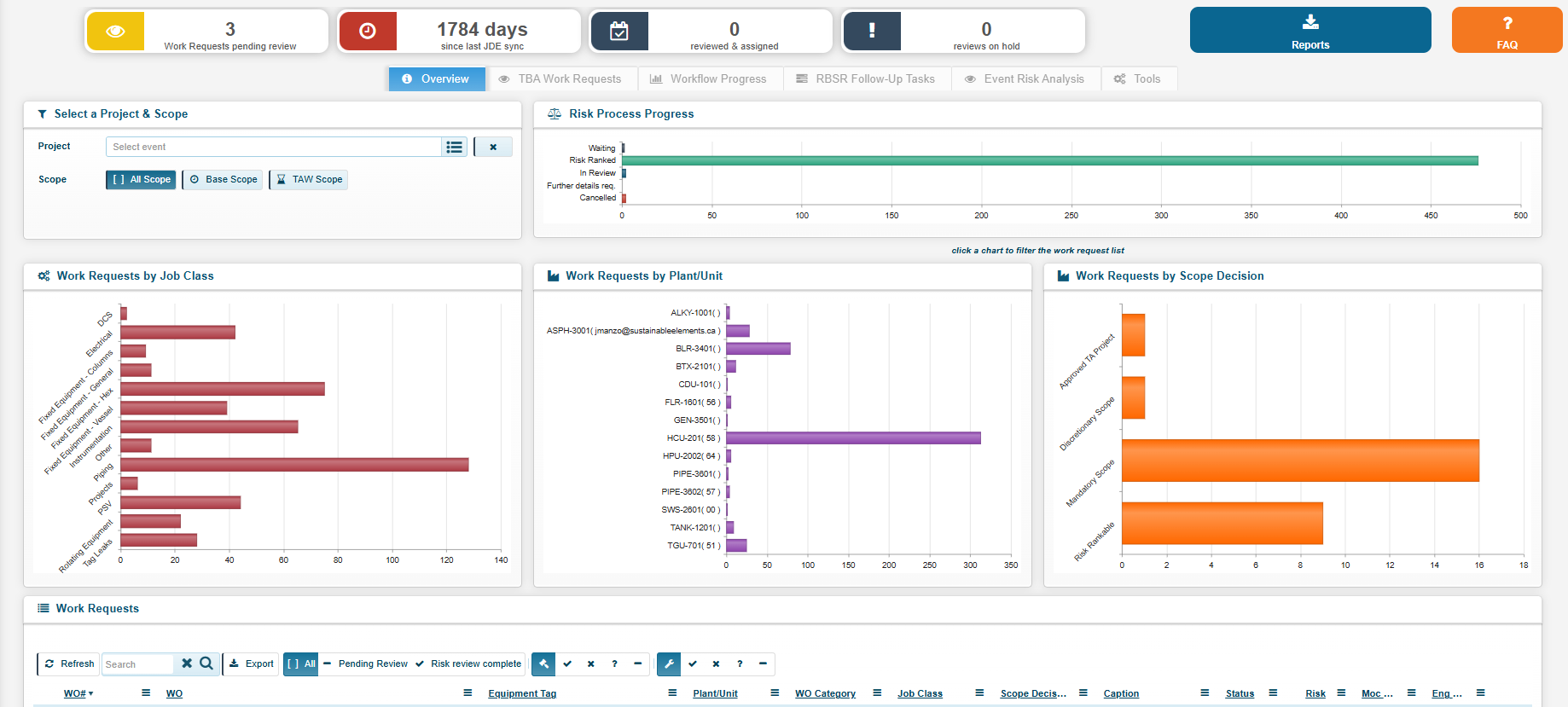
Every turnaround contains more work than can realistically be completed. Risk, reliability, compliance, operations, engineering, and business priorities all compete for finite resources. Risk Based Scope Review helps organizations evaluate, prioritize, justify, and document scope decisions before planning resources are committed.
Reduce Email-Based Coordination During Strategic Planning
Strategic planning creates a large volume of follow-up actions, coordination items, review tasks, and deadline-driven activities across multiple groups. Team Task Management centralizes task management so event teams can coordinate work, set priorities and deadlines, use personal dashboards, and receive notifications without relying on scattered email threads.
Turn Previous Experience Into Better Decisions
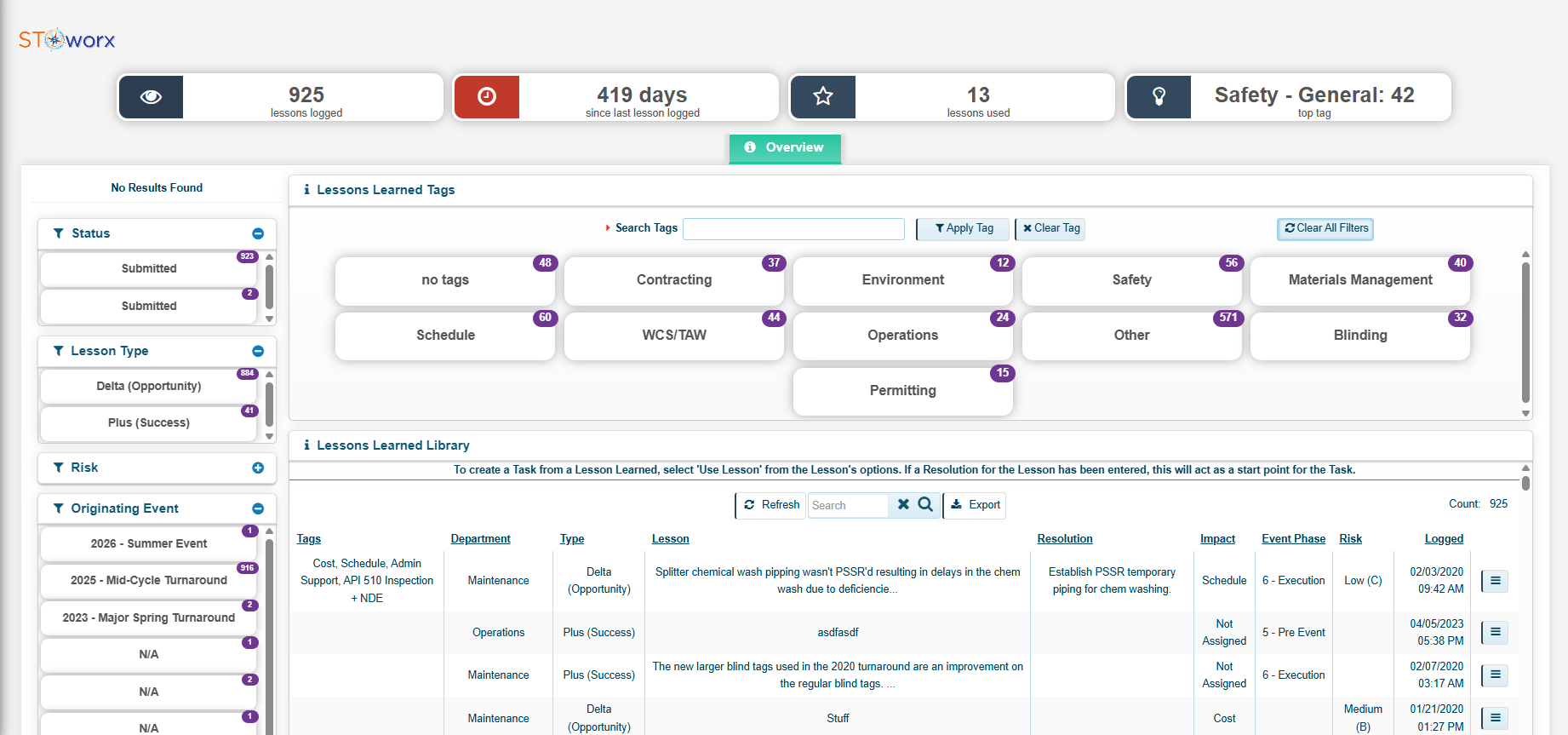
Many organizations conduct lessons learned sessions but struggle to make those lessons available when the next event begins. STOworx connects lessons learned directly into future planning and scope discussions so previous experience can influence future decisions.
Platform Components
Components Commonly Used During Strategic Scope & Governance
Strategic Scope & Governance is supported by multiple STOworx components working together to create structure, accountability, visibility, and decision traceability before detailed planning begins.
Plan2Plan
Purpose
Optimize strategic planning through a structured framework of milestones, tasks, deliverables, readiness indicators, and stakeholder accountability.
Typical Uses
- Strategic planning milestones
- Readiness preparation
- Department coordination
- Deliverable tracking
- Gated planning processes
- Planning best practices
- Planning accountability
- Readiness reviews
Operational Outcome
Helps ensure stakeholder departments are prepared for execution by establishing a structured planning process with defined deliverables, improved visibility, and increased readiness.
Risk Based Scope Review
Purpose
Efficiently categorize, prioritize, and evaluate turnaround work requests before planning resources are committed.
Typical Uses
- Scope screening
- Risk-based prioritization
- Work request evaluation
- Governance review
- Scope optimization
- Scope justification
- Worklist review
- Decision support
Operational Outcome
Provides a clear view of proposed work, enabling informed scope decisions that balance risk, cost, reliability, and operational requirements.
Lessons Learned
Purpose
Capture, organize, and apply operational insights from previous events to improve future planning and execution.
Typical Uses
- Lesson capture
- Theme-based categorization
- Operational improvement tracking
- Issue resolution
- Continuous improvement
- Future event preparation
- Planning reference
- Knowledge retention
Operational Outcome
Ensures future events benefit from previous experience by making lessons accessible, actionable, and tied to continuous organizational improvement.
Team Task Management
Purpose
Centralize planning and project task management while reducing the chaos associated with email-based coordination.
Typical Uses
- General project task tracking
- Team coordination
- Personal dashboards
- Notifications
- Priority management
- Deadline management
- Cross-functional collaboration
- Task visibility
Operational Outcome
Improves collaboration and operational efficiency by providing a centralized location for task management, priorities, deadlines, and team communication.
Connected Workflow
Strategic Scope Does Not Operate In Isolation
Scope decisions influence planning effort.
Planning decisions influence work pack requirements.
Work packs influence readiness.
Readiness influences execution.
Execution outcomes create future lessons learned.
STOworx maintains those relationships across the event lifecycle instead of treating each phase as a separate activity.
Success Indicators
What Better Looks Like
Every scope item has documented justification
Governance reviews are consistent
Risk decisions remain traceable
Previous lessons influence future events
New team members understand historical decisions
Leadership has confidence in the work list
Better Scope Decisions Create Better Turnarounds
Every turnaround inherits the consequences of its earliest decisions. Let's discuss how your team evaluates, prioritizes, and governs scope before planning resources become overloaded.
Book a Conversation