Turn Execution Data Into Better Decisions
Execution generates thousands of updates throughout a turnaround.
Work progresses.
Contractors complete activities.
Issues emerge.
Blocked systems appear.
Punch items accumulate.
Schedules evolve.
The challenge is not collecting information.
The challenge is amalgamating all the meaningful data to identify where small issues could become major schedule impacts
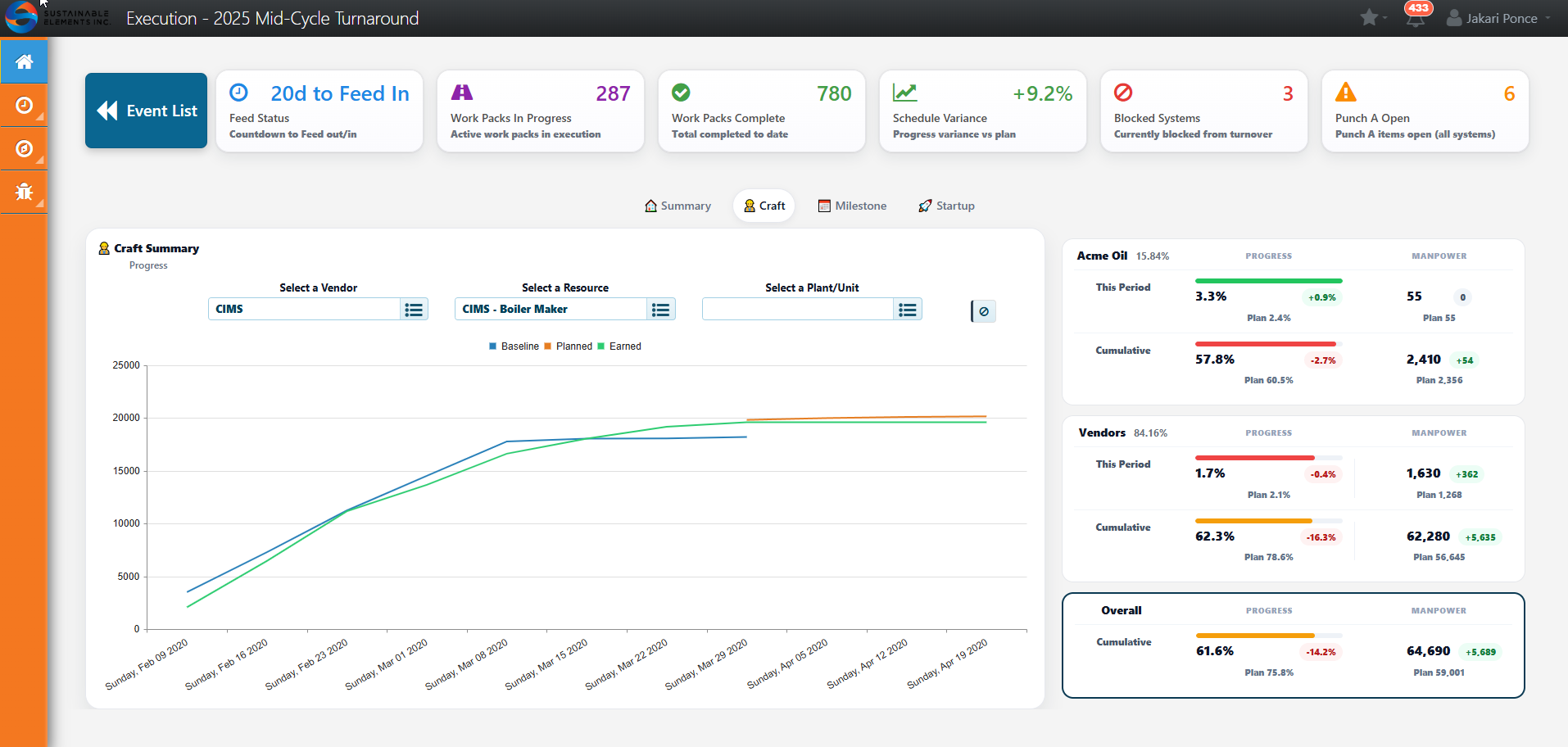
STOworx combines field progress, schedule performance, readiness indicators, contractor activity, and operational metrics into a continuously updated view of turnaround health.
Voices From The Field
What Event Leaders Tell Us
"One source of truth for the contractors to act on."
— Former Turnaround Lead
"I don't even understand how you would manage it without STOworx."
— Event Leadership User
The Challenge
The Challenge
Most organizations can report completed work.
Far fewer can explain whether the turnaround is trending ahead or behind plan.
Execution creates an enormous amount of information.
Progress updates.
Schedule changes.
Blocked systems.
Punch items.
Contractor performance.
Resource utilization.
Operational constraints.
Many organizations also struggle to ensure that everyone is working from the same information.
Work packages, procedures, drawings, schedules, look-aheads, and execution updates are often distributed across multiple systems, shared drives, and email chains.
The result is confusion, duplicate effort, and inconsistent decision making.
The problem is not information availability. The problem is turning information into actionable operational intelligence before schedule impacts become unavoidable.
Common Friction Points
Common Friction Points
Status Collection Becomes A Full-Time Job
Teams spend excessive time gathering updates from contractors, supervisors, and stakeholders.
The Schedule Falls Behind Reality
Field progress often changes faster than schedule updates can be maintained.
Leadership Can See Progress But Not Performance
Organizations know what has been completed but struggle to understand what is likely to happen next.
Emerging Issues Lack Visibility
Small execution problems frequently become major impacts before management becomes aware of them.
Ownership Becomes Difficult To Track
Issue resolution often depends on verbal commitments, emails, and manual follow-up.
Decision Makers Lack Operational Context
Critical decisions are often made without visibility into schedule performance, execution trends, or emerging bottlenecks.
Critical Information Is Lost Between Shifts
Coordinators identify risks, delays, workarounds, and emerging concerns throughout the day, but much of that information is communicated verbally, through emails, or in informal discussions. Leadership often lacks visibility into developing issues until they have already impacted the event.
Information Requests Become Bottlenecks
Field teams frequently encounter situations where additional clarification is required before work can proceed. Questions about drawings, procedures, scope intent, engineering requirements, or execution constraints often become trapped in email chains and informal conversations. Delays occur because teams cannot easily track who owns the question, who must respond, or whether the issue has been resolved.
How STOworx Helps
How STOworx Supports Execution
Capture Progress Where The Work Happens
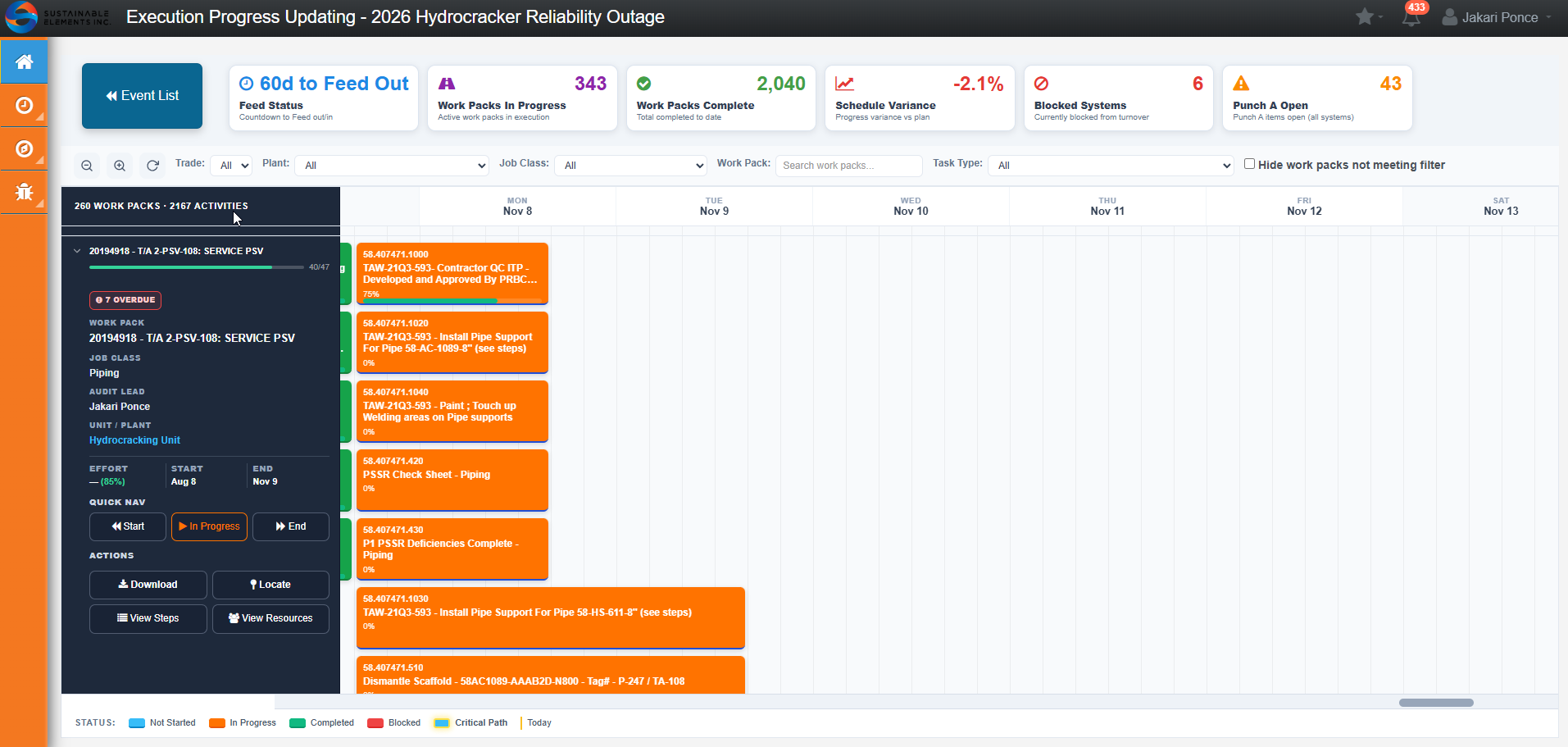
Field teams can update execution progress directly against work package activities, reducing reporting delays and improving operational visibility.
Give The Entire Team Access To Current Work Information
Execution teams, contractors, coordinators, planners, supervisors, and leadership can access work packages, supporting documents, procedures, drawings, and execution requirements from a centralized repository.
Synchronize Progress Back To The Schedule
Execution updates can be synchronized back into the master schedule, reducing manual maintenance effort while improving schedule accuracy.
Deliver Meaningful Look-Aheads To The Organization
Leverage schedule data and execution progress to generate daily and upcoming work views that help teams understand what is approaching, what is at risk, and where attention should be focused.
Transform Execution Updates Into Operational Intelligence
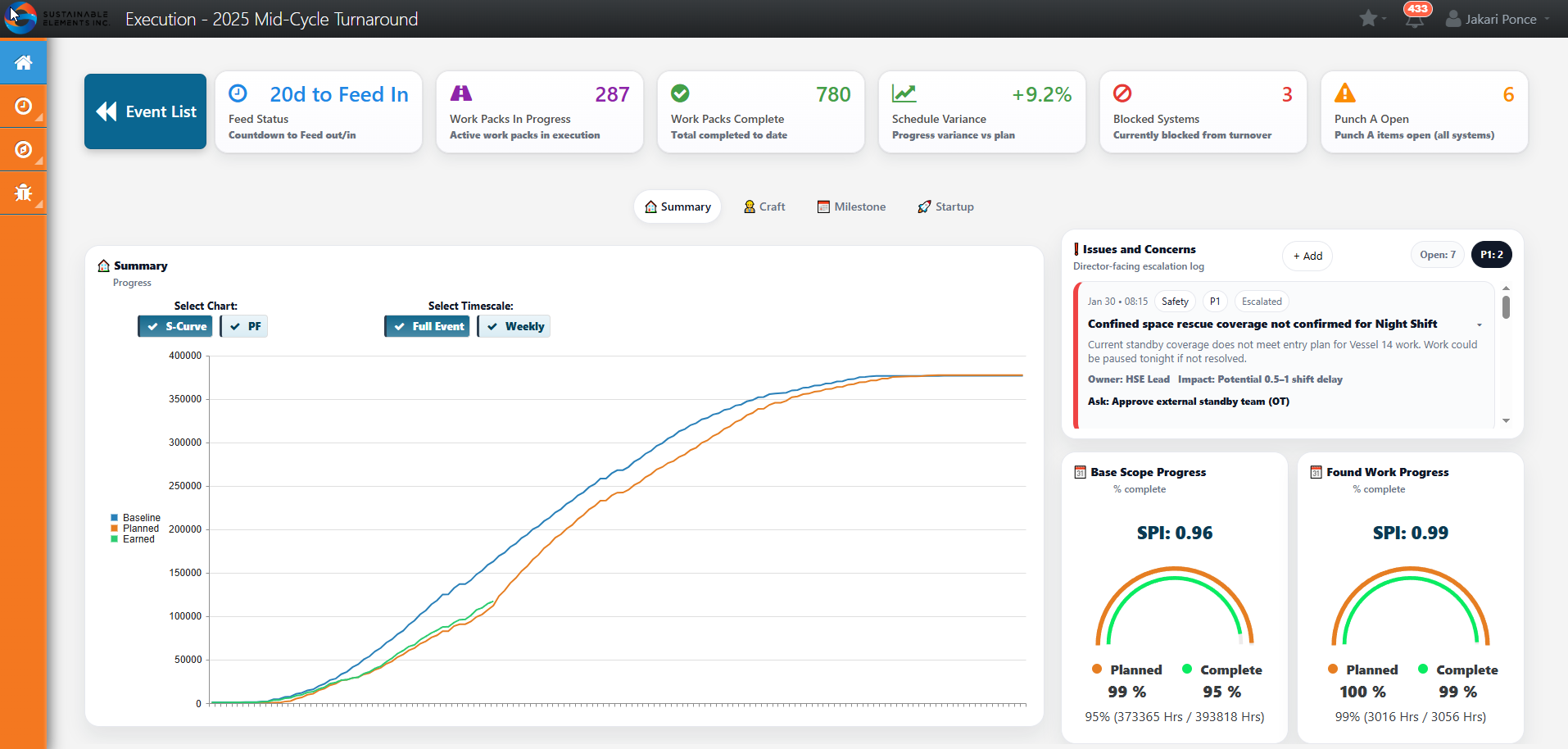
Execution Performance continuously combines schedule data, work package progress, readiness indicators, blocked systems, punch items, and field updates into a real-time picture of event health.
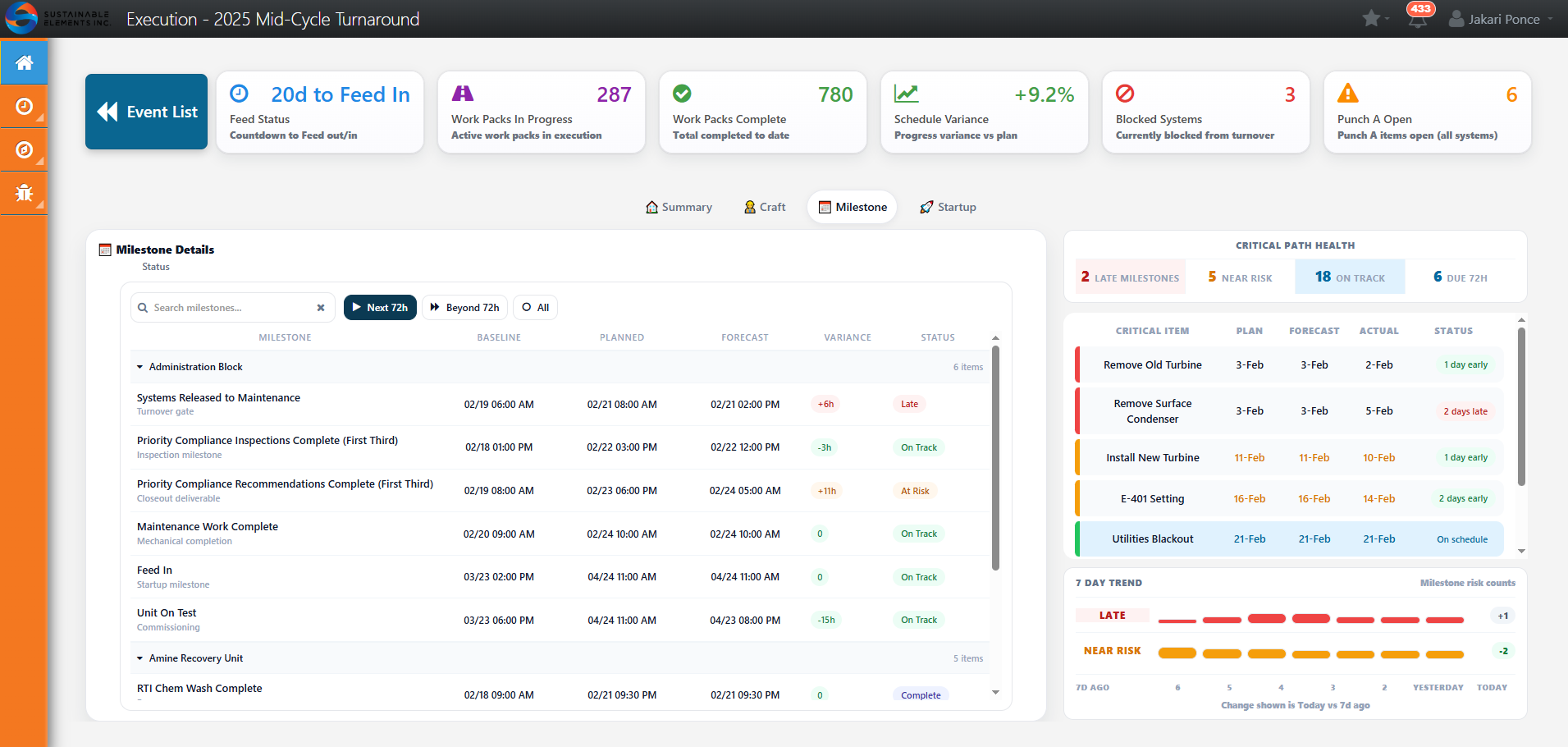
Monitor Performance Trends As They Develop
Track schedule performance, readiness metrics, resource utilization, execution forecasting, and turnaround progress throughout the event lifecycle.
Create One Source Of Truth For The Entire Event
Provide contractors, coordinators, schedulers, planners, and leadership with a common view of execution status and operational priorities.
Improve Shift-To-Shift Operational Awareness
Turnover Comments provide a structured shift log that allows coordinators to communicate upcoming concerns, delays, constraints, emerging risks, and operational observations to incoming personnel and leadership.
Visualize Active Work Fronts
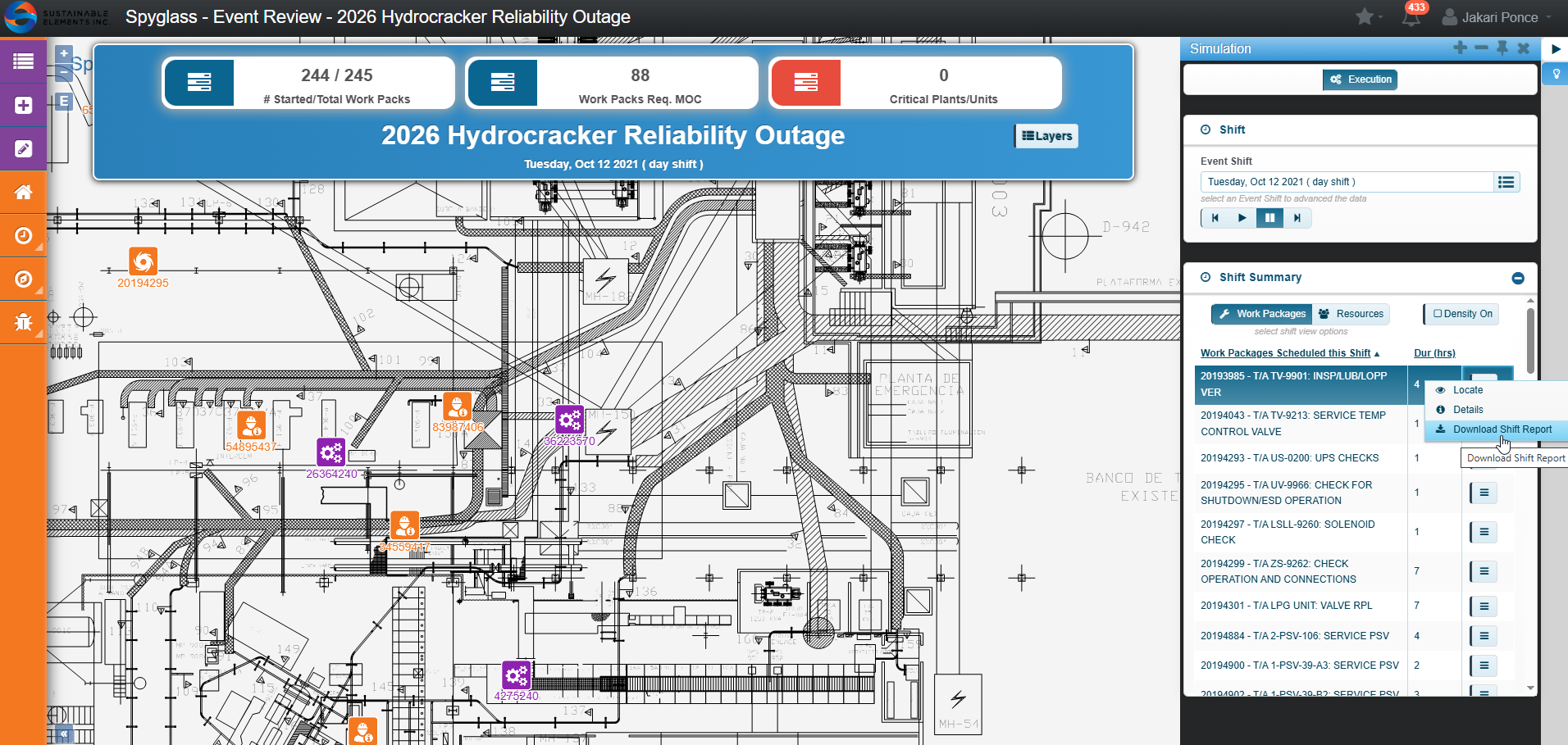
Review active work locations, congestion risks, SIMOPS interactions, and operational activity through Spyglass.
Resolve Execution Questions Faster
Provide a structured process for managing Requests For Information (RFIs), ensuring execution teams, planners, engineers, contractors, and leadership maintain visibility into questions, responses, ownership, and resolution status.
Platform Components
Components Commonly Used During Execution
Execution focuses on transforming field updates into operational intelligence that supports faster decisions and better outcomes. Execution Performance is the primary management capability. Execution Updating provides the field data that powers it.
Execution Performance
Purpose
Combine execution updates, P6 schedule information, work package status, readiness indicators, and operational metrics into a unified performance management environment.
Typical Uses
- Schedule performance monitoring
- S-Curve analysis
- Execution forecasting
- Resource utilization
- Craft performance tracking
- Bottleneck identification
- Readiness monitoring
- Multi-event oversight
- Trend analysis
- Leadership reporting
Operational Outcome
Provides leadership with a continuously updated operational picture of turnaround performance while enabling faster identification of risks, bottlenecks, schedule impacts, and emerging execution issues.
Execution Updating
Purpose
Capture field progress directly against execution activities and work package steps.
Typical Uses
- Progress updates
- Completion tracking
- Contractor reporting
- Execution status updates
- Daily progress monitoring
Operational Outcome
Improves execution visibility while reducing delays between field progress and schedule reporting.
P6 Integration
Purpose
Maintain alignment between execution progress and the master schedule while supporting reporting, forecasting, and operational visibility.
Typical Uses
- Progress synchronization
- Schedule reporting
- Trend analysis
- Daily look-aheads
- Upcoming work reviews
- Schedule-driven reporting
- Forecasting
- Schedule visibility
Operational Outcome
Allows organizations to leverage their scheduling investment while improving collaboration, execution visibility, look-ahead planning, and schedule awareness.
Work Pack Development
Purpose
Provide a centralized repository for work packages, supporting documentation, procedures, drawings, and execution requirements.
Typical Uses
- Central work package repository
- Document access
- Procedure access
- Contractor access
- Field reference
- Contractor reviews
- Package readiness
- Deliverable verification
Operational Outcome
Provides a single location where teams can access current work packages, supporting documentation, procedures, drawings, and execution requirements throughout the turnaround.
Turnover Comments
Purpose
Provide structured shift-to-shift communication between turnaround coordinators, supervisors, and leadership.
Typical Uses
- Shift handovers
- Emerging issue communication
- Delay reporting
- Operational observations
- Upcoming work visibility
- Constraint identification
- Leadership awareness
Operational Outcome
Improves continuity between shifts while providing leadership with visibility into developing risks, execution challenges, and operational concerns before they become larger issues.
Spyglass
Purpose
Provide a visual operational view of execution activity across the facility.
Typical Uses
- Active work visualization
- SIMOPS monitoring
- Congestion management
- Operational awareness
- Spatial coordination
Operational Outcome
Improves operational awareness by providing context that traditional schedules cannot deliver.
RFI Coordinator
Purpose
Provide a centralized process for managing Requests For Information during turnaround execution.
Typical Uses
- Field clarification requests
- Engineering questions
- Drawing reviews
- Scope interpretation
- Procedure clarification
- Contractor questions
- Response tracking
- Approval workflows
Operational Outcome
Reduces delays caused by unanswered questions while improving accountability, visibility, and response management across the turnaround organization.
Connected Workflow
From Field Updates To Operational Intelligence
Planning and scheduling establish what should happen and when.
Readiness validation confirms the organization is prepared to begin.
Field teams access current work packages and begin capturing progress as work occurs.
RFI Coordinator manages questions and clarifications before they become delays.
Execution updates synchronize back into the schedule, keeping performance data current.
Execution Performance transforms those updates into schedule performance, trend analysis, forecasting, and management visibility.
Turnover Comments maintain shift-to-shift awareness and leadership visibility throughout the event.
Startup and closeout completes the lifecycle with validated turnover and organizational learning.
STOworx connects field activity to leadership decision-making throughout the entire execution lifecycle.
Success Indicators
What Better Looks Like
Real-time execution visibility
Accurate schedule awareness
Centralized access to work information
Meaningful shift-to-shift communication
Earlier identification of execution risks
Better contractor and leadership alignment
Faster resolution of execution questions

Turn Execution Data Into Better Decisions
The most effective turnaround teams don't just collect progress — they understand what it means. Let's discuss how STOworx transforms field updates into operational intelligence that supports faster, better decisions.
Book a Conversation