Every Turnaround Needs A Strategic Roadmap
Before work packs are developed, materials are staged, contractors are mobilized, or execution begins, organizations must coordinate hundreds of strategic planning activities across multiple teams.
Operations.
Maintenance.
Engineering.
Reliability.
Inspection.
Safety.
Contracts.
Leadership.
The challenge is not managing individual jobs.
The challenge is ensuring the entire organization progresses toward readiness using a common strategic plan that spans from event inception through final closeout.
Voices From The Field
What Event Leaders Tell Us
"The benefit is in standardizing the approach and making it instantly visible who owns what and what's complete versus incomplete."
— Former Turnaround Lead
"The best part of what you offer is consistency, even when a turnaround organization changes."
— Former Refinery VP
The Challenge
The Challenge
Large turnarounds involve far more than work preparation.
They require organizations to coordinate strategic milestones, readiness objectives, stakeholder commitments, governance reviews, deliverables, and organizational alignment over months or even years.
Many organizations manage multiple turnaround events simultaneously across multiple facilities.
Each event follows different timelines.
Different teams own different deliverables.
Milestones shift.
Readiness requirements evolve.
Leadership needs visibility into progress without relying on dozens of spreadsheets, meetings, and status updates.
Without a structured strategic planning framework, readiness becomes difficult to measure, accountability becomes difficult to maintain, and planning quality varies between events.
Common Friction Points
Common Friction Points
Every Event Uses A Different Approach
Planning quality varies because teams reinvent the process for each turnaround.
Strategic Milestones Lack Visibility
Leadership struggles to understand whether events are progressing toward readiness.
Ownership Is Difficult To Maintain
Hundreds of activities require accountability across multiple departments and stakeholders.
Schedule Changes Create Significant Rework
Milestone changes often require manual updates across numerous planning activities.
Multiple Facilities Create Coordination Challenges
Organizations struggle to manage readiness consistently across multiple sites and events.
Progress Reporting Consumes Valuable Time
Teams spend excessive effort preparing updates instead of advancing readiness.
How STOworx Helps
How STOworx Supports Definition & Planning
Standardize Turnaround Planning Across The Organization
Create reusable strategic planning templates based on turnaround size, complexity, facility type, business unit requirements, or organizational standards.
Manage Multiple Events Across Multiple Facilities
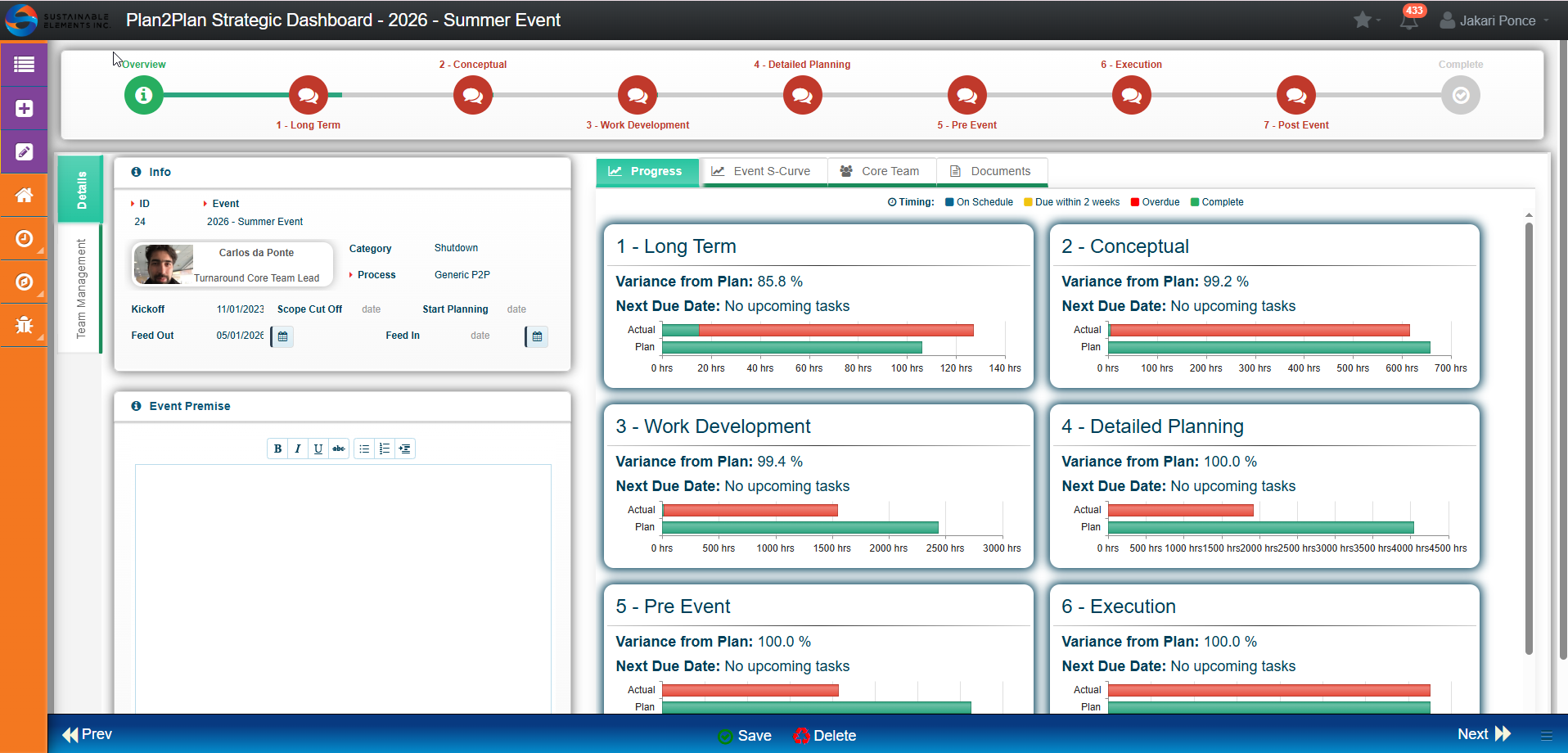
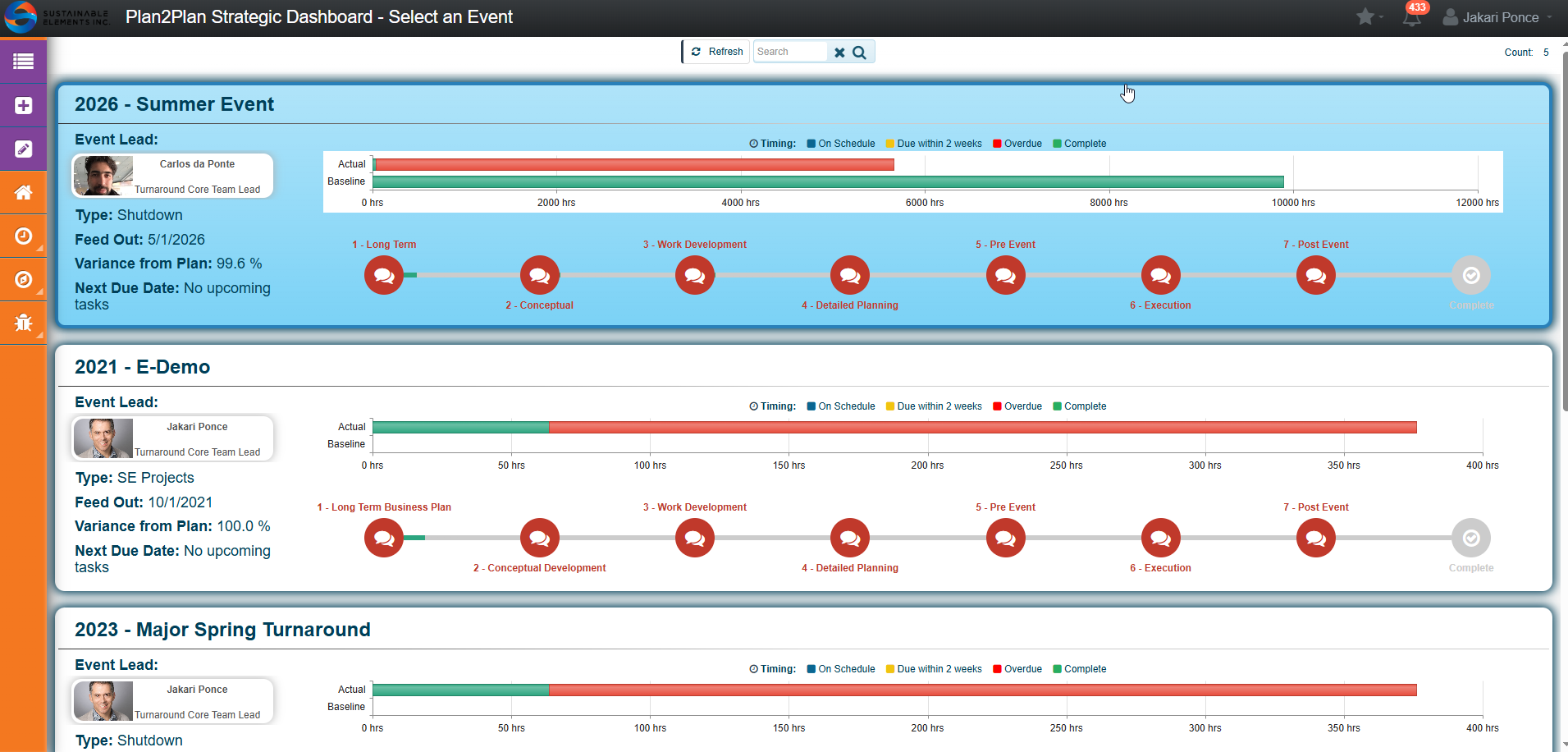
Track strategic plans, milestones, deliverables, readiness progress, and planning status across multiple facilities and turnaround events from a single platform.
Create Clear Ownership And Accountability
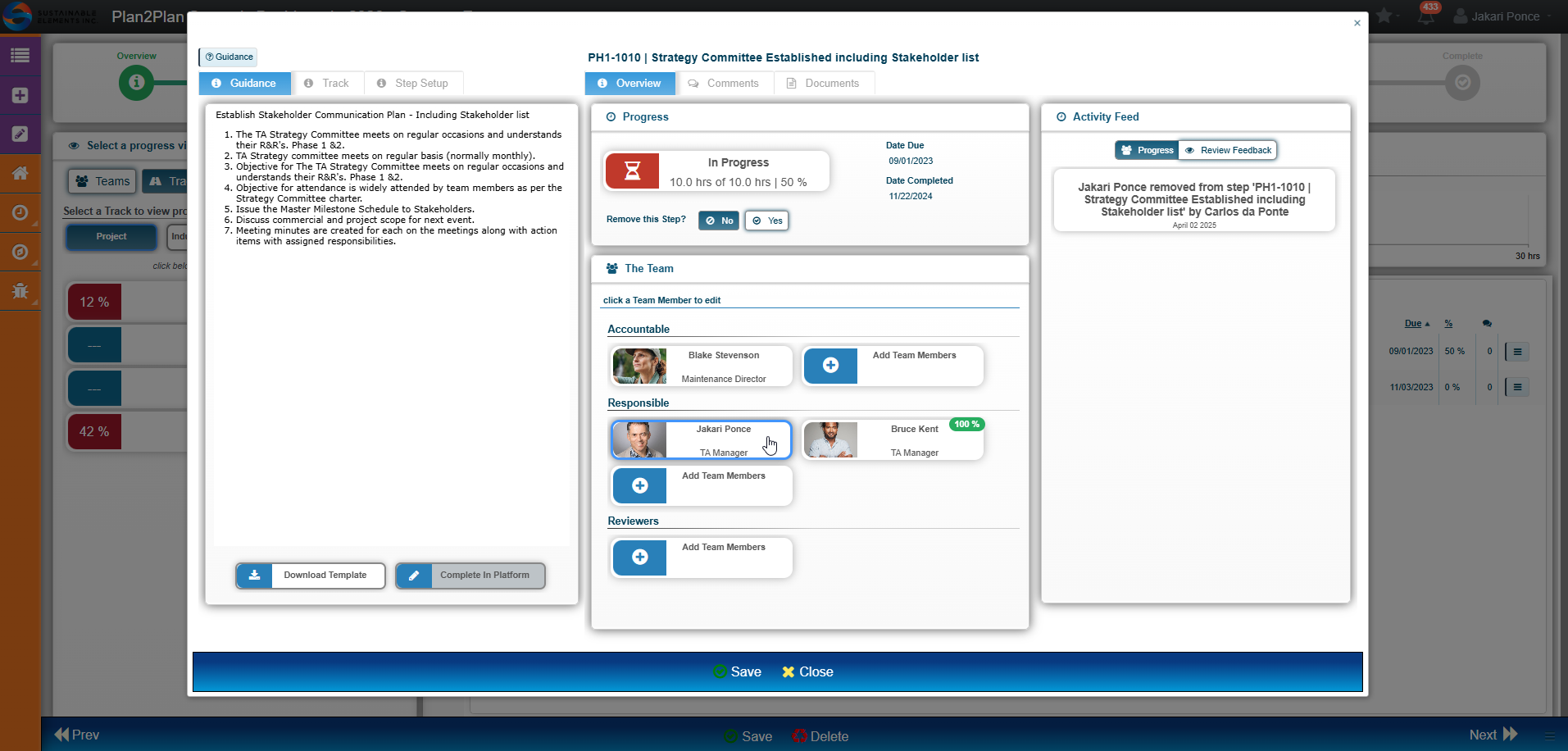
Assign activities, deliverables, milestones, and readiness responsibilities to the appropriate teams and stakeholders while maintaining visibility into progress.
Adapt To Change Without Administrative Overhead
When milestone dates change, dependent activities can be automatically rescheduled to maintain alignment and reduce manual planning effort.
Translate Activities Into Meaningful Readiness Metrics
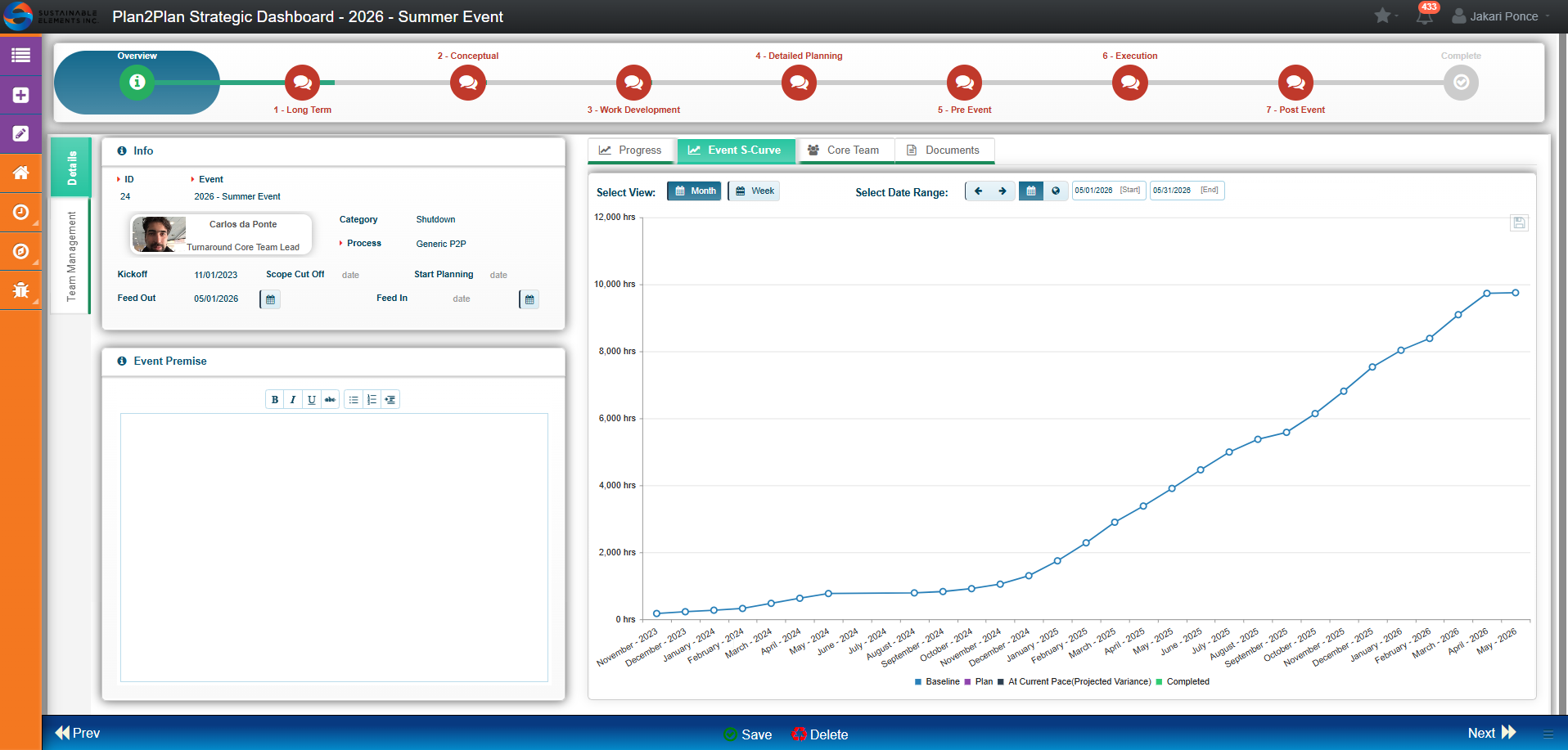
Track progress using internal milestones, customer requirements, corporate frameworks, or industry-standard readiness models.
Simplify Progress Reporting
Provide an intuitive interface that allows contributors to quickly update progress while giving leadership immediate visibility into readiness and milestone achievement.
Platform Components
Components Commonly Used During Definition & Planning
Definition & Planning focuses on managing the strategic turnaround plan from inception through readiness and ultimately event closeout. STOworx provides connected tools that support accountability, readiness management, stakeholder alignment, and strategic visibility across the entire lifecycle.
Plan2Plan
Purpose
Manage the strategic turnaround plan, readiness framework, milestones, deliverables, and stakeholder accountability required to prepare an organization for execution and guide the event through completion.
Typical Uses
- Strategic turnaround plans
- Multi-event management
- Multi-facility coordination
- Reusable planning templates
- Milestone management
- Deliverable management
- Responsibility assignment
- Governance reviews
- Readiness frameworks
- Readiness assessments
- Progress reporting
- Automated schedule adjustments
- Strategic planning governance
- Event lifecycle management
Operational Outcome
Provides leadership with visibility into readiness, milestone progress, stakeholder accountability, and organizational preparedness while establishing a repeatable planning framework across facilities and events.
Team Task Management
Purpose
Centralize planning and project task management while reducing the chaos associated with email-based coordination.
Typical Uses
- Team coordination
- General project task tracking
- Notifications
- Personal dashboards
- Priority management
- Deadline management
- Cross-functional collaboration
- Task visibility
Operational Outcome
Improves collaboration and operational efficiency by providing a centralized location for planning activities, priorities, deadlines, and communication.
Dashboards & Reporting
Purpose
Provide leadership visibility into readiness, milestone achievement, planning progress, and strategic risks.
Typical Uses
- Readiness reporting
- Executive dashboards
- Milestone tracking
- Planning progress
- Gap identification
- Portfolio visibility
- Multi-event reporting
Operational Outcome
Provides objective visibility into strategic readiness without relying on manual reporting processes.
Lessons Learned
Purpose
Capture and apply knowledge from previous events to improve future turnaround preparation and execution.
Typical Uses
- Lessons capture
- Improvement recommendations
- Future planning reference
- Knowledge retention
- Continuous improvement
Operational Outcome
Ensures future events benefit from previous organizational experience and operational learning.
Differentiator
One Strategic Planning Framework. Multiple Readiness Models.
Many organizations already have established turnaround readiness methodologies.
Others rely on corporate standards, customer requirements, or industry best practices.
Plan2Plan allows organizations to maintain a single strategic planning process while reporting progress against user-defined, corporate, customer, or industry-standard readiness frameworks.
This creates consistency in execution while preserving flexibility in reporting and governance.
Connected Workflow
The Strategic Plan Connects The Entire Event Lifecycle
Strategic Scope & Governance establishes business objectives.
Definition & Planning establishes the strategic roadmap used to guide the turnaround from inception through completion.
Detailed Planning converts strategic objectives into executable work packages.
Preparation & Readiness validates organizational preparedness.
Execution completes the work.
Startup and Closeout return the facility to operation and capture organizational learning.
Plan2Plan provides continuity across these phases by maintaining visibility into milestones, deliverables, ownership, and readiness throughout the event lifecycle.
Success Indicators
What Better Looks Like
Consistent strategic planning across all events
Clear accountability for readiness activities
Visibility across multiple facilities and turnarounds
Reduced administrative scheduling effort
Measurable readiness progress
Greater confidence in organizational preparedness
Strategic Visibility Creates Better Turnarounds
The challenge is not building a turnaround plan. The challenge is keeping an entire organization aligned, accountable, and progressing toward readiness. Let's discuss how your team manages strategic planning, readiness, milestones, and accountability across the event lifecycle.
Book a Conversation